For golfers over 60
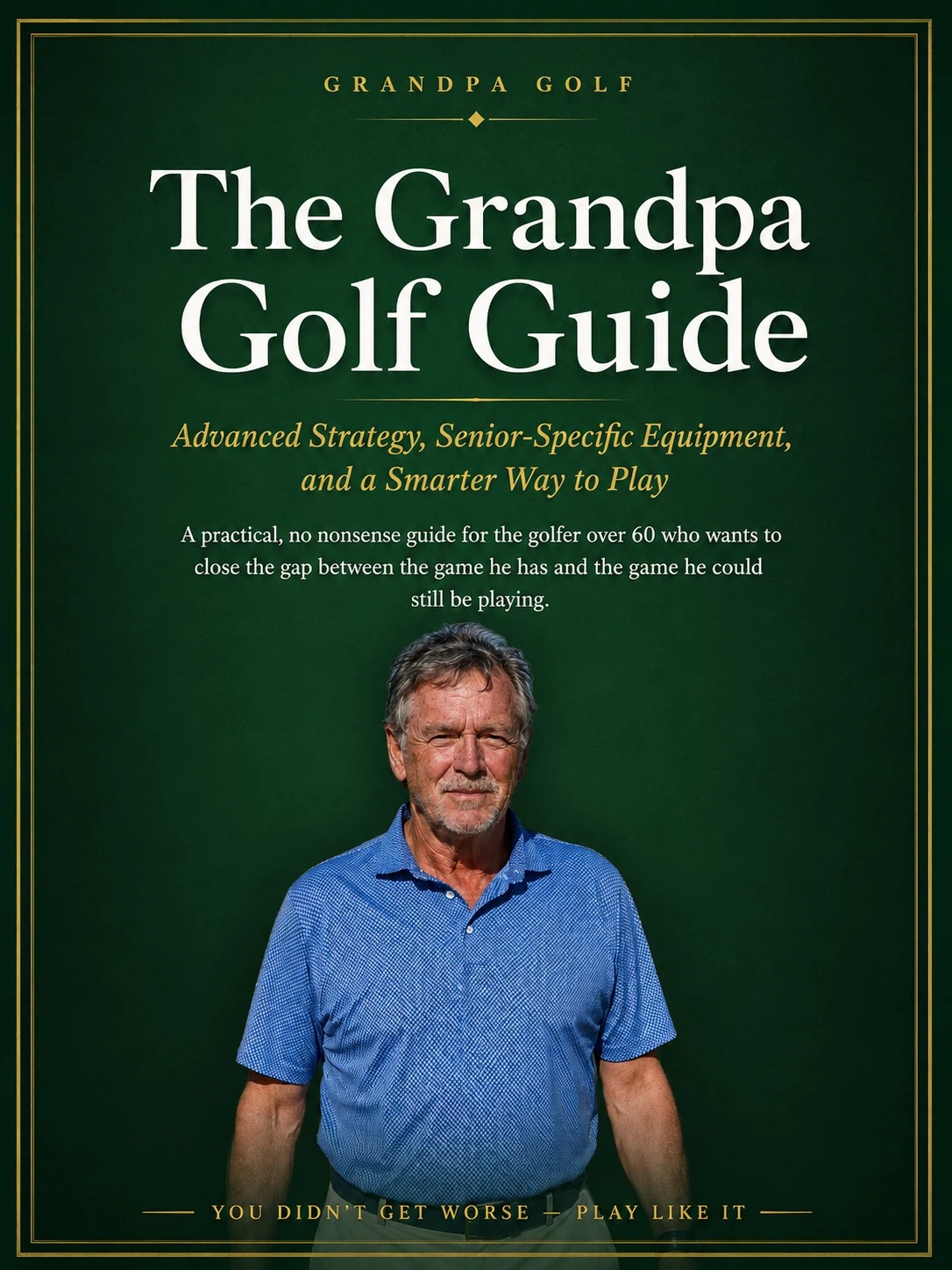
A 221-page guide to closing the gap between the golfer you are now and the technique, equipment, and expectations still built for the golfer you used to be. Real research — not recycled tips, not blanket surrender.
The problem
Most instruction still assumes a thirty-year-old body — the same backswing length, the same shaft weight, the same scoring targets, regardless of what's actually changed. The rest of it swings the other way: aim for bogey, be grateful you can still walk nine, accept the slow fade. Neither one is honest, and neither one helps.
Something real does change in the body after 60 — rotation, grip strength, balance, recovery. But a much bigger share of what feels like decline is something else entirely: a gap between the golfer you are right now and the equipment, technique, and expectations still built for the golfer you used to be. That gap is fixable, usually faster than the physical side ever could be. You just have to know where to close it.
What's inside
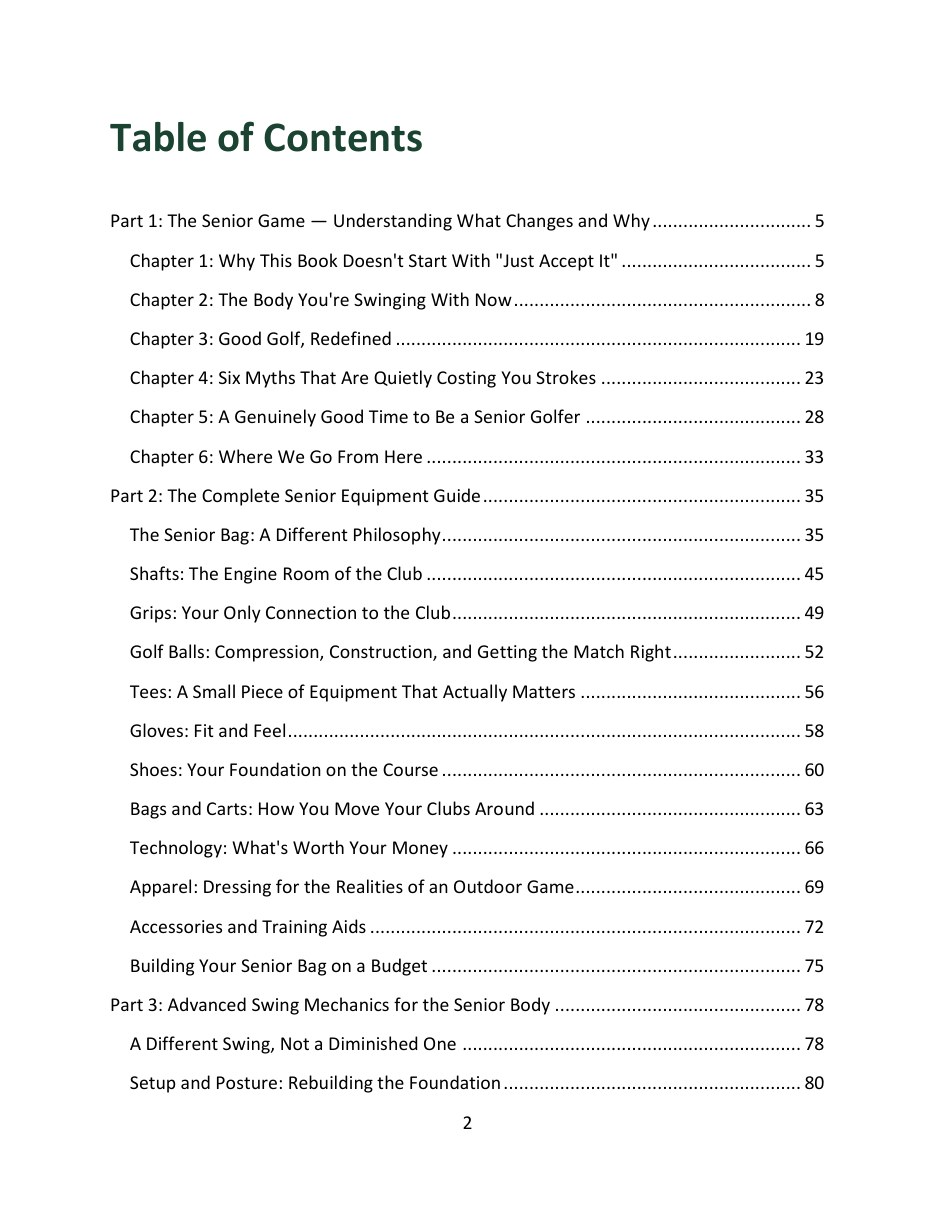
Why the body changes, the six myths quietly costing you strokes, and why right now is a genuinely good era to be an older golfer.
Drivers, shafts, balls, tees, grips, gloves, shoes, carts, and tech — matched to swing speed and joint comfort instead of your birthday.
Rebuilding an efficient, powerful swing around the rotation and stability you actually have now.
Mobility, strength, and balance work built around golf's five most common trouble spots.
Course management, scoring targets, and a practice plan sized to your actual week.
The 2019 rules rewrite explained in plain language, etiquette, nutrition, heat safety, a glossary, and three fillable reference charts.
Why this one's different
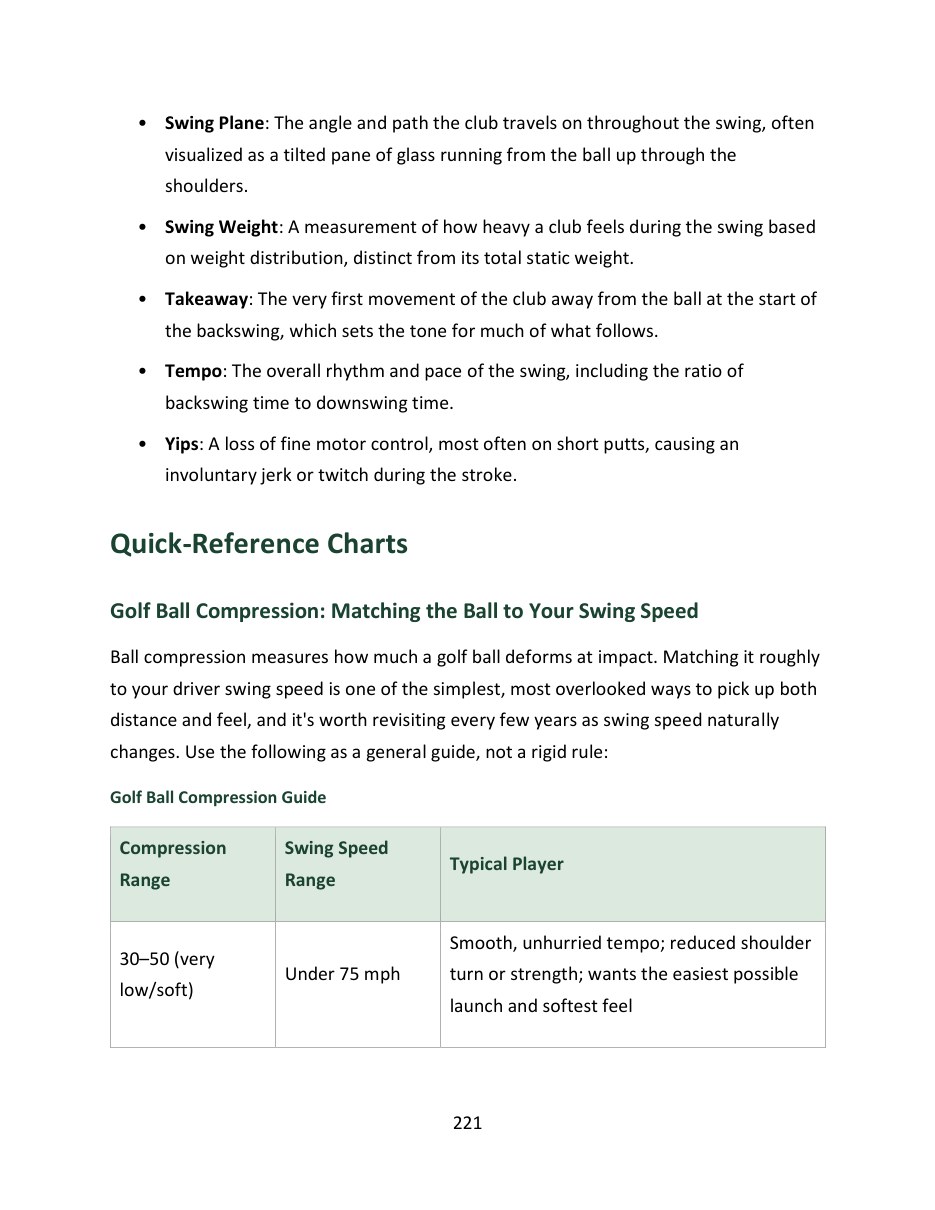
Every recommendation ties to a number you can measure — swing speed, compression, flex — not a label on a shelf.
USGA data, Titleist Performance Institute research, Arthritis Foundation guidance, current sports-science findings — not recycled forum wisdom.
Six full parts, 221 pages, built to be a reference you return to for years, not a weekend read.
Larger type, real structure, and fillable charts you can print and actually use standing on the range.
Get the guide
Questions
I've played for decades. Why would I need a guide?
This isn't a beginner's book. It's for golfers who already know the game and want to close the gap between how they used to play and the equipment, mechanics, and strategy built for the body they have right now.
Is this mostly the equipment chapter padded out?
No — equipment is one of six full parts. The rest covers swing mechanics, fitness, course strategy, and a complete rules-and-reference section, each researched and written at the same depth.
What format do I actually get?
A 221-page PDF you can read on any device or print. Delivered instantly after purchase.
Will this replace lessons from my pro?
No, and it isn't trying to. Think of it as what to bring to that lesson — the equipment and physical groundwork sorted out, so the time with your pro goes toward the parts only a real lesson can fix.
Do I need to be tech-savvy for the technology chapter?
No. It's written in plain language for anyone deciding whether a rangefinder, a launch monitor, or a home simulator is worth the money — not a manual for using one.
The gap between how you used to play and how you play now is closer to closed than it feels.